Supporting Better Aquaculture with Quality Products & Technical Solutions
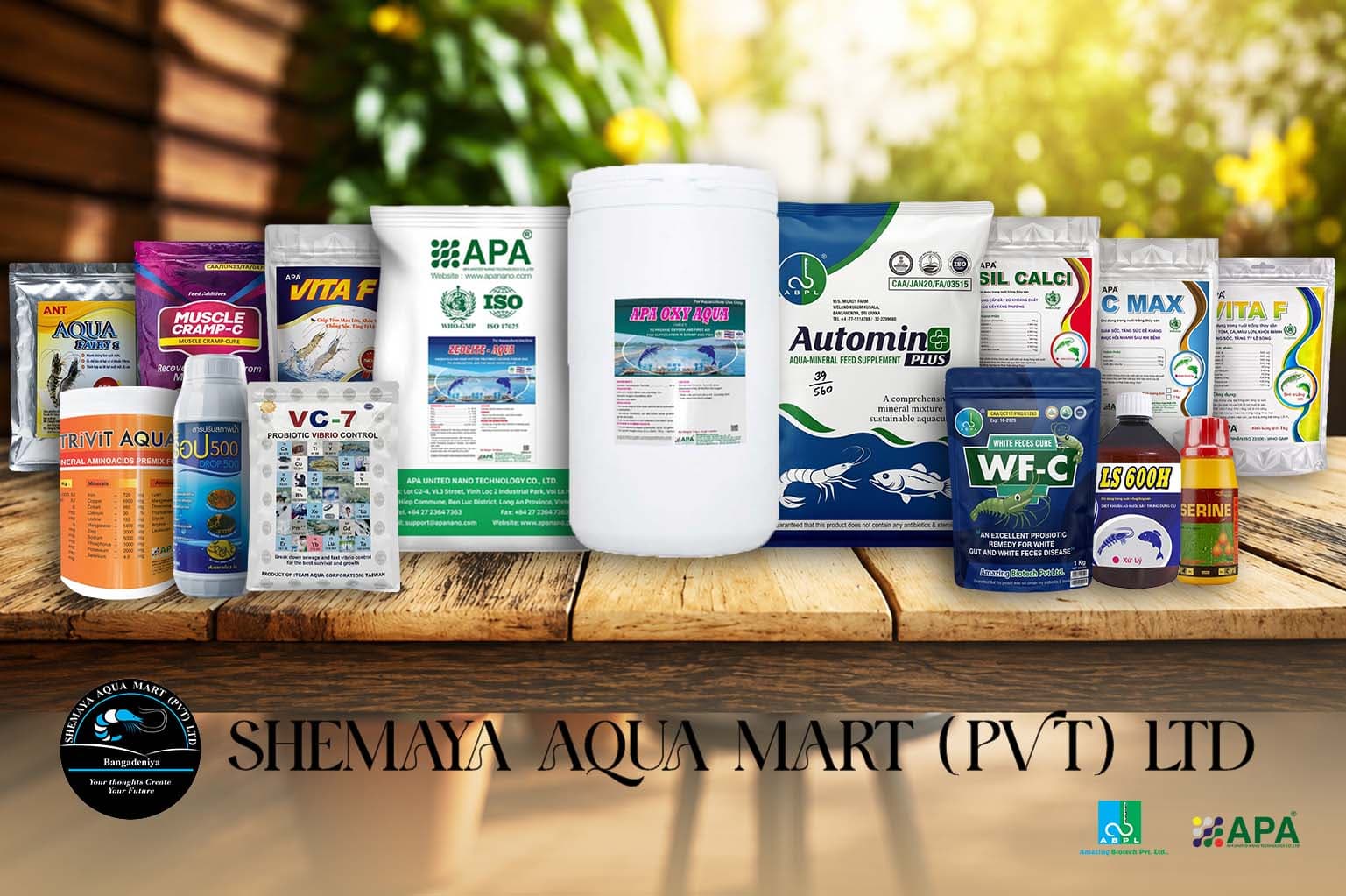
In aquaculture, success is built on many important factors healthy water, proper nutrition, good farm management, and access to reliable aquaculture products. At SHEMAYA AQUA MART (PVT) LTD, we understand that farmers need more than just products. They need dependable solutions that support them throughout their farming journey.
Located in Bangadeniya, Chilaw, SHEMAYA AQUA MART (PVT) LTD provides a range of aquaculture products and solutions designed to support shrimp and fish farming operations.
Quality Products for Aquaculture Success
Every farm has different requirements. From nutritional supplements and probiotics to water-management products and other aquaculture solutions, choosing suitable products can make an important difference in farm management.
Our product range includes solutions from established aquaculture suppliers and brands, offering farmers access to products for different stages and requirements of aquaculture production.
Whether you are managing a shrimp farm, fish farm, or working with ornamental fish, having access to the right products at the right time is essential.
Supporting Shrimp and Fish Farmers
Successful aquaculture is not simply about adding products to a pond. It is about understanding the farm, observing the water and animals, identifying challenges, and making informed management decisions.
At SHEMAYA AQUA MART,we aim to support farmers by providing:
Aquaculture products and nutritional solutions Probiotic and water-management solutions Mineral and supplementary products Products for shrimp and fish farming Technical guidance and farmer support Reliable service for aquaculture professionals and farm owners More Than a Supplier Your Aquaculture Partner
We believe that a strong relationship with farmers is just as important as the products we provide. Our goal is to understand the challenges faced by aquaculture farmers and help them find practical solutions suited to their farming requirements.
From daily farm management to maintaining suitable farming conditions, our team is committed to providing dependable support whenever farmers need it.
Building a Better Future for Aquaculture
Aquaculture continues to play an important role in food production and livelihoods. As farming practices develop, farmers need reliable products, better knowledge, and professional support to improve efficiency and maintain healthy production.